
April 22, 2026 · Updated September 29, 2026 · Residency Process
How to Get Your Paraguay Cédula: The 2026 Step-by-Step Guide
How a foreign resident gets their Paraguay cédula after residency is approved — the document chain, legalization steps, and the timeline that actually holds.
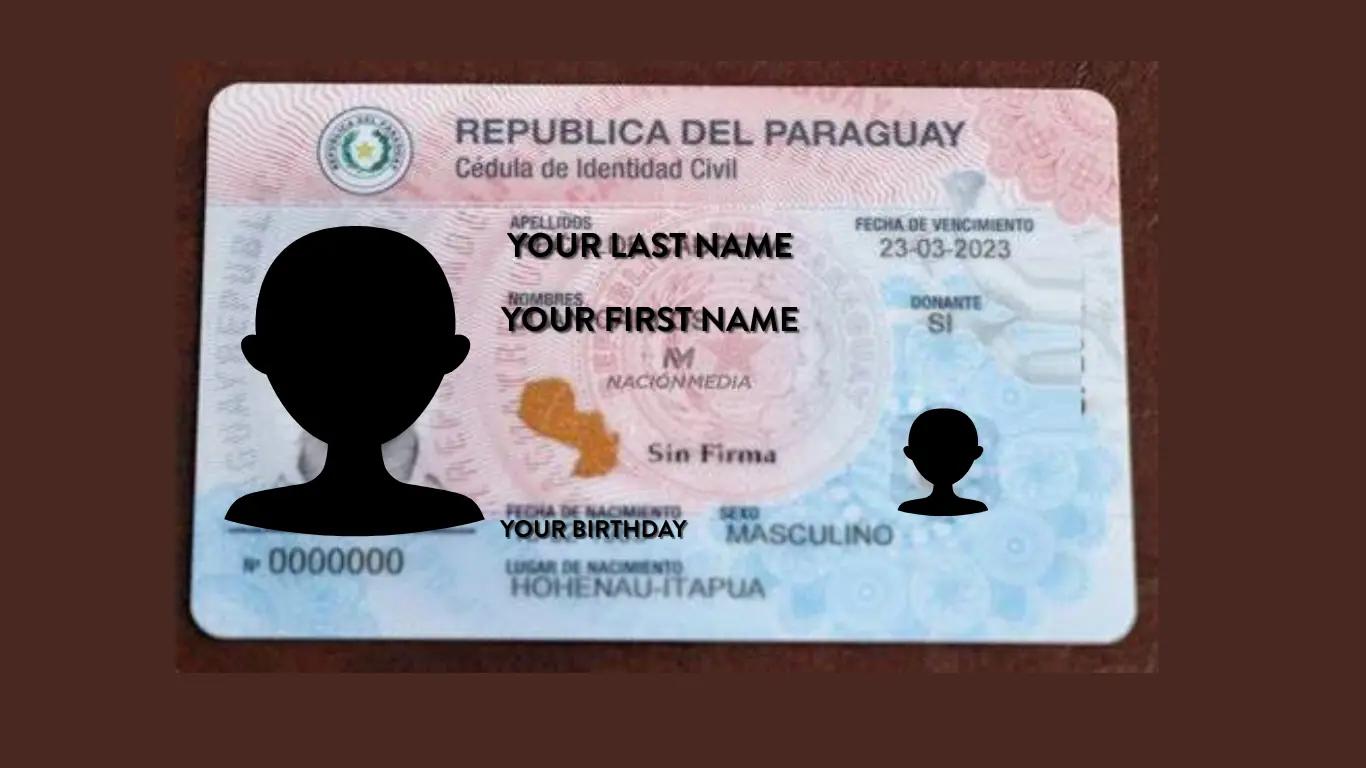
The Cédula de Identidad Paraguaya is Paraguay’s national ID. It’s the small laminated card with your photo, your fingerprints on file, and a number that becomes the center of your administrative life here. It’s what a bank wants to see when you open an account. It’s what a notary asks for when you sign a lease. It’s what a traffic officer expects when you hand them documents at a checkpoint. It’s the prerequisite for the Paraguayan driver’s license, for registering a vehicle in your name, for setting up utilities without a Paraguayan friend co-signing, and for every other piece of routine local life that wants more than a passport.
The cédula comes after residency. If you don’t yet have a residency approval and a Carnet de Radicación in hand, you’re not at the cédula step yet — start with the Paraguay residency step-by-step guide and come back here once your residency is approved. The cédula process can’t begin until then.
We’ve walked our own team and many clients through this end to end — temporary residency, permanent residency, RUC, cédula, driver’s license, banking — so this guide is the version we wish we’d had ourselves the first time. Plan on roughly 30 business days from application submission to a card ready for collection. The work that lives before submission — collecting and legalizing the right local documents in the right order — is where most of the time and most of the friction sit.
Prerequisites: what you need before you start
Before you set foot in any office for the cédula process itself, you need:
- Approved residency. Temporary or permanent, your call — but the Carnet de Radicación (the laminated residency card from Migraciones) has to be in your hand. The cédula application reads off it.
There’s one timing trap built into this process that catches people, and it’s worth flagging up front: several of the local Paraguayan documents you’re about to collect are short-lived — three to four months, depending on the document. If you start at the wrong end of the chain, the document you obtained first will expire before the document you needed it for is ready. The document order matters. We’ll lay it out.
The local Paraguayan documents you collect (and legalize)
The cédula file is built on top of four local documents from various branches of the National Police, each with its own legalization path. None of these can be skipped. None of them survive long once they’re issued. Plan the sequence so the chain closes before any of them ages out.
1. Certificado de Vida y Residencia (Certificate of Life and Residence)
Issued by: your local Police Station or Justice of the Peace.
Legalization chain — 3 steps:
- Obtain the report from the Information Department (Informática).
- Take it to the Personnel Department for certification.
- Final legalization at the Comandancia de la Policía Nacional.
This is the one that confirms you live where you say you live. It depends on your address holding up — which is one of the reasons a real residential address matters here, not a mailbox. (The full address-versus-mailbox question is laid out in mailbox vs residential address.)
2. INTERPOL Background Report (Local)
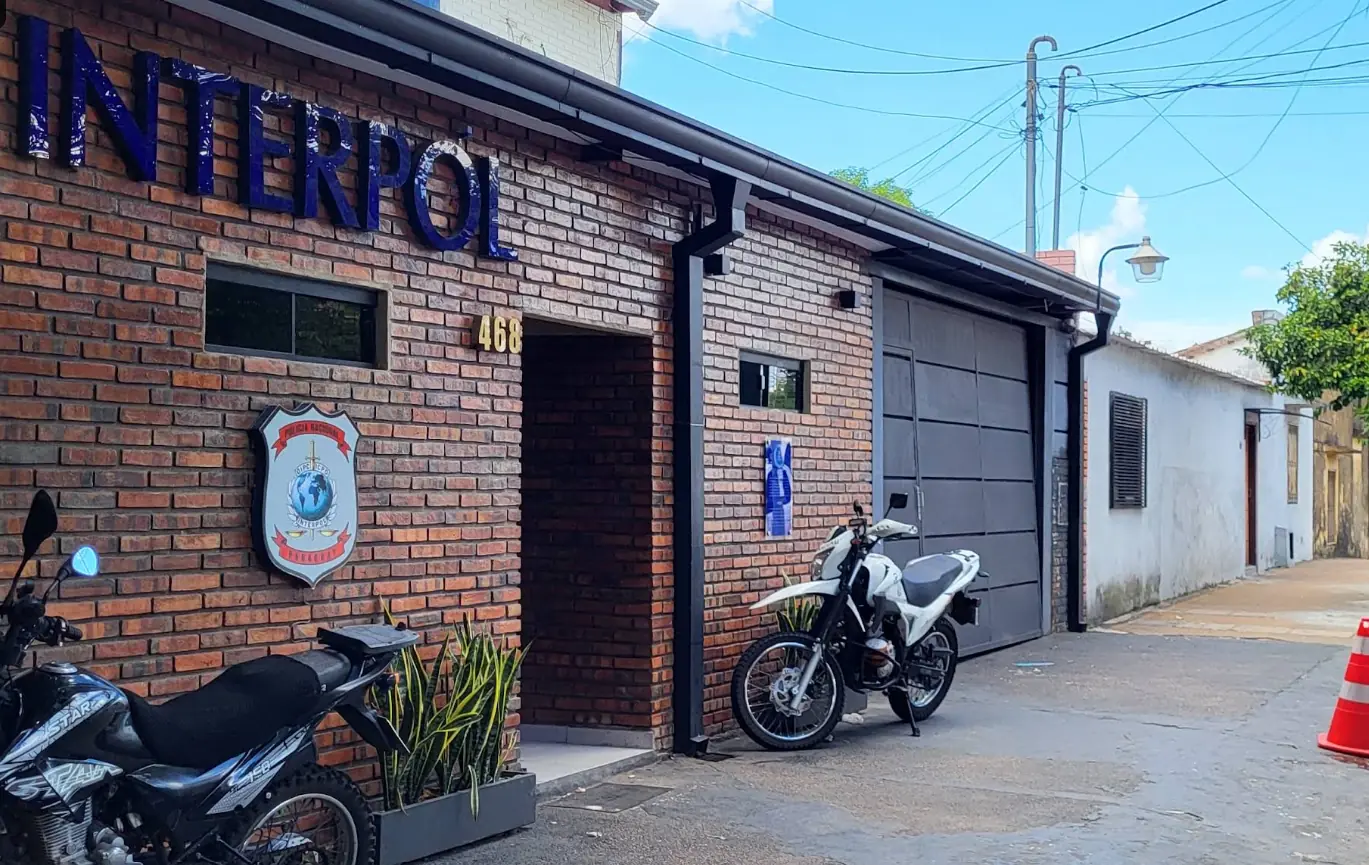
Issued by: the INTERPOL Information Department.
Validity: 4 months. The INTERPOL report you used for your residency application has very likely already expired by the time you reach the cédula step — assume you’re getting a fresh one.
Legalization chain — 4 steps:
- Obtain the report from the Information Department.
- Get it certified at the Personnel Department.
- Take it to the Comandancia de la Policía Nacional.
- Take it to the Ministry of the Interior for final legalization. The fee for this final step is Gs 115,000.
The 4-step chain is the most common failure point in the whole cédula file. People stop at step 3, assume they’re done, and find out at the cédula counter that the Ministry of the Interior stamp is missing. The Ministry step is non-optional.
3. Certificado de Antecedentes para Extranjeros (Police Record for Foreigners)
Issued by: the Information Department of the National Police.
Validity: also 4 months. Like the INTERPOL report, you may need a fresh one even if you got one earlier in your residency journey. This one does not have the same multi-step legalization chain — it’s a more straightforward issuance — but it has the same short shelf life, so don’t pull it too early.
4. Carnet de Registro de Extranjeros (Foreigner Registration Card)
Issued by: INTERPOL National Police, in the basement of the same INTERPOL building where you obtained the background report.
Important order-of-operations: to apply for the Carnet de Registro de Extranjeros, you must already have your fully legalized INTERPOL Background Report and your fully legalized Certificado de Vida y Residencia in hand. You can’t get this card first and the others later — the basement office wants to see the legalized chain on the documents above before they’ll process this one.
Cost and processing time:
- Standard service: Gs 115,000 for 10–14 day processing.
- Express service: Gs 215,000 for same-day processing.
For most clients we run the express service — paying the difference saves a calendar week and reduces the risk of one of the other short-validity documents aging out before you reach the application counter.
The full document dossier you bring to Identificaciones
You arrive at the cédula office with originals plus authenticated photocopies from a Paraguayan public notary (escribano público). One non-obvious detail: the photocopies must be on uncut sheets — the standard letter-size paper, not trimmed down. Officers reject trimmed copies. Notaries who do this work routinely know the rule; if you walk into a copy shop yourself, you have to ask.
The full checklist:
- Original Carnet de Radicación + authenticated photocopy of the laminated card.
- Original valid passport + authenticated photocopy.
- Authenticated photocopy of your apostilled birth certificate.
- Authenticated photocopy of your apostilled civil status certificate (marriage, divorce, etc., if applicable).
- Original apostilled criminal background check from your country of origin.
- Original, fully legalized INTERPOL Background Report (the local one, with all 4 stamps).
- Original, fully legalized Certificado de Vida y Residencia (with all 3 stamps).
- Original Certificado de Antecedentes para Extranjeros.
- Authenticated photocopy of your Carnet de Registro de Extranjeros.
The officer at the counter checks each original against its copy, hands the originals back, and keeps the copies for the file. Bring everything; don’t try to guess which ones they’ll skip. They don’t skip.
The application visit: Identificaciones
Address: Avenida Boggiani esquina con R.I. 2 Ytororó, Asunción.
Process at the counter:
- The officer verifies your originals against the authenticated copies and keeps the copies.
- You provide your biometric data: photograph taken on the spot, fingerprints scanned electronically, digital signature captured.
- You pay the application fee.
- You receive a contraseña — the application receipt — which is what you’ll need to collect your card later.
Application fee: Gs 8,500. That’s not a typo — eight thousand five hundred Guaraníes, paid at submission. The bulk of the cost in this whole process sits in the legalizations and the Carnet de Registro de Extranjeros, not in the cédula fee itself.
Take a clear photo of the contraseña the moment you walk out. Email it to yourself. The piece of paper is small and easy to lose, and losing it costs you a side trip to file a police report before you can collect.
Tracking your cédula application
Online tracking for the cédula does not exist in any reliable form, the same way it doesn’t exist for residency. The way you check status is direct contact with the Departamento de Identificaciones, with your contraseña details ready.
Practical channels:
- Phone — Identificaciones is a separate agency from Migraciones. Identificaciones (Policía Nacional, Departamento de Identificaciones) handles cédula status; Migraciones at +595 21 411 2000 only handles the residency stage. Identificaciones does not publish a stable status-check line — the most reliable channels are an in-person visit at Avenida Boggiani esq. R.I. 2 Ytororó, or a written inquiry through their site. Have your contraseña number and your name as it appears on the application ready when you contact them.
- WhatsApp. Anecdotally, some clients have gotten status pings via WhatsApp at numbers associated with the Division Cedulación Extranjera–Dpto. de Identificaciones. No number is officially published as a status-check channel, so treat any answer you get as helpful-but-unofficial — and don’t expect a number we’d link to here.
- In person. Walking in to the Avenida Boggiani office with your contraseña and asking is sometimes the fastest path, especially close to the 30-business-day mark.
Realistic timeline: about 30 business days from application submission to a card ready for collection. Some files run faster, some slower. Don’t compare your timeline to someone else’s; their file isn’t your file. (We covered the broader status-check question for residency and cédula together in an earlier piece — the channels haven’t materially changed.)
The Paraguayan Tax Authority (SET) website is sometimes mentioned in this context. To be clear: SET’s pre-registration tool is not a cédula tracker. It’s a verification tool you use after you have your cédula, to confirm your details propagated into the tax system. It tells you nothing about whether your card is printed.
Collection of your biometric cédula
The new biometric cédulas have an electronic chip embedded. They are not picked up by proxy. Only the holder can collect, in person, at Identificaciones.
What you bring:
- The contraseña (the application receipt).
- Yourself, with a face that matches the biometric capture from application day.
If you lost the contraseña, you file a denuncia (a police report) at any police station, then bring that report to Identificaciones to be allowed to collect. It works, it’s just a wasted afternoon — which is why we tell every client to photograph the contraseña the day they get it.
Validity of the card matches your residency status at the time of issuance:
- Temporary residents: 2 years.
- Permanent residents: 10 years.
A note on the temporary-to-permanent transition: when your residency converts from temporary to permanent (typically after the two-year temporary window), the cédula doesn’t auto-upgrade. There’s a separate replacement step to reissue the card under the permanent residency status. It’s not the original cédula process from scratch, but it’s not nothing either. Plan for it.
The conversion itself isn’t automatic, either: under the current rules it requires proof of economic solvency — for most people a RUC in good standing plus its tax compliance certificate — and Migraciones checks that you weren’t outside Paraguay for more than 365 days during the temporary period. The full picture is in the permanent residency guide.
What the cédula unlocks
This is the part that makes all the legalization runs worth it. Once the card is in your wallet:
- Local bank accounts open up properly. Many banks won’t even start a serious account-opening conversation without a cédula.
- The Paraguayan driver’s license becomes available — the licensing system reads your identity record from the national ID database, so no cédula means no license.
- Leases under Paraguayan law sign cleanly. No more landlords asking for a co-signer or a translator.
- Vehicle registration in your name — registrations and transfers run on the cédula.
- Local utilities — electricity (ANDE), water (ESSAP), internet — can be contracted without complications for property you own. (For rentals, Paraguayan utility accounts stay in the property owner’s name — that’s how the country works, not a gap in your paperwork.)
- Many financial institutions outside Paraguay accept the cédula as a primary or secondary ID, particularly across South America.
- The dignity of paying with a national ID at every counter that asks, instead of pulling out your passport every single time.
Paraguay is the anchor; life is everywhere. The cédula is the document that makes Paraguay-as-anchor real on paper.
What trips cédula applications up
The cédula counter isn’t trying to bounce you. The file rules are simply strict and the system isn’t forgiving when something doesn’t match. The most common reasons files come back across the counter:
- Expired local documents at the moment of submission. The short validity windows are the trap — four months for the INTERPOL report, three for the Vida y Residencia. Either one, collected at the start of the cédula process, can age out before everything else is ready. Sequence the chain so the short-lived documents are the last ones you collect, not the first.
- Missing legalization steps on the INTERPOL report. The 4-step chain — Information Department, Personnel, Comandancia, Ministry of the Interior — has to close. Three out of four is a rejection.
- Photocopies that aren’t authenticated, or are on cut sheets. Notarized copies on full uncut sheets, or it gets handed back.
- Trying to apply before residency is fully approved and the Carnet de Radicación is in hand. The Residencia Precaria (interim proof) isn’t enough — Identificaciones wants the actual laminated card.
- A residential address mismatch between what’s on file with Migraciones and what shows on the Vida y Residencia. This is where the right kind of address matters; see mailbox vs residential address for the full delineation.
Most of these are avoidable with sequencing. None of them are avoidable with a hopeful attitude.
What we handle
Most of the work in the cédula process isn’t intellectually hard — it’s logistically annoying. Three offices in different parts of Asunción, four legalization stamps in a specific order, a notary that knows the photocopy rule, a counter at Identificaciones with a 30-day clock and short-validity documents that all want to age out at once. It’s the kind of run that goes smoothly if you’ve done it twenty times and badly if you’re doing it for the first time.
When clients hand the cédula to us, this is what we do:
- Sequence the document chain so the short-validity items are pulled at the right time relative to the other steps. No expired documents at the counter.
- Run the legalization steps at the Comandancia, Personnel and Information Departments, and the Ministry of the Interior. We know which window, which floor, which day of the week is fastest.
- Schedule the Identificaciones appointment at Avenida Boggiani.
- Run the authenticated photocopies through notaries we work with regularly — uncut sheets, done right the first time.
- Day-of accompaniment at the cédula office for clients who want it, so you’re not navigating Spanish-language counters alone on biometric capture day.
- Track through to ready-for-collection — contraseña in hand, status pings as the 30-business-day mark approaches, a heads-up the day the card is ready.
- Renewal at the temporary-to-permanent conversion or at the 10-year mark on permanent. It comes around again; we keep the file.
We handle the unglamorous parts. You focus on your life.
Costs at a glance
Pulling out the line items the source post documents directly, plus the practical adjacencies:
| Item | Cost (PYG) | Notes |
|---|---|---|
| Authenticated photocopies | Varies | Same day. Notary fee per page. Uncut sheets only. |
| INTERPOL legalization (Ministry of the Interior, final step) | Gs 115,000 | The final stamp on the 4-step chain. The report itself has 4-month validity. |
| Carnet de Registro de Extranjeros (standard) | Gs 115,000 | 10–14 day processing. |
| Carnet de Registro de Extranjeros (express) | Gs 215,000 | Same-day processing. |
| Cédula application fee at Identificaciones | Gs 8,500 | Paid at submission. |
Outside the table: notary fees for the authenticated photocopies (small, per-page), incidental transit costs in Asunción on legalization-run days, and — if you’re using us — a Sweet Home Paraguay handling fee for running the chain end to end. Create a free account in the Sweet Home Paraguay App for current pricing and the detailed process steps on the work we handle.
A note on the Guaraní figures: these are the fees the offices charge directly. Government fees in Paraguay can adjust with the year’s budget. The numbers above match what we and our clients have paid most recently; if a fee has shifted at the counter on the day, the difference is small and the rest of the process holds.
What to do next
If you’re still scoping the move and the cédula is something you’re trying to picture before residency is even underway, create a free account and tell us your situation. We’ll walk you through what your full path actually looks like — residency, cédula, RUC if relevant, driver’s license — in plain language, before you commit anything.
If you’re already a client, the Sweet Home Paraguay App is where the cédula process is tracked end to end: services in progress, a document vault that holds your apostilled originals and your legalized copies, and status visibility through to the day your card is ready at Avenida Boggiani.
We’re there for you when you need us. WhatsApp and email are how we work — no phone trees, no off-hours voicemail, no scheduling friction. We’ll know your name when you reach out.
Cédula in hand means Paraguay-as-anchor is in place on paper. The driver’s license follows. The bank account follows. The lease in your name follows. Paperwork is the enemy. The life that starts after is the prize.

Welcome to your sweet home Paraguay.