
April 15, 2026 · Updated September 29, 2026 · Residency Process
Paraguay Residency Step-by-Step: What Actually Happens From Application to Cédula
The standard Paraguay residency path through DNM, written by people who run it weekly. Documents, addresses, costs, timelines, and the parts that trip files up.
This is the step-by-step guide to the Essential track in Paraguay — the route most foreigners take through the Dirección Nacional de Migraciones (DNM), starting with temporary residency and converting to permanent two years later. It is not the investment route. If you have capital you want to deploy and you’d rather skip temporary residency entirely, that’s the CIE — Certificado de Inversión Extranjera, and it’s a different post.
Sweet Home Paraguay runs this route almost every week. We’ve personally been through every step we sell — temporary residency, permanent residency, RUC, driver’s license, bank accounts, opening businesses, getting mobile numbers, often while traveling between countries. The process is doable solo if you want to do it solo. It is also a lot easier with someone running point who’s stood in the Migraciones queue and knows which window opens first.
What follows is the realistic shape of it. Once your file is submitted, set aside 3–4 months for the residency card plus 1 month for the cédula on the Essential track, plus the time it takes to collect your documents at home. Run through us, the in-country part is a single trip of about four days: residency and cédula are both submitted on the same visit, and the finished documents are picked up or shipped to you afterward. Doing it solo usually means a second trip or a long stay. The pages below explain why.
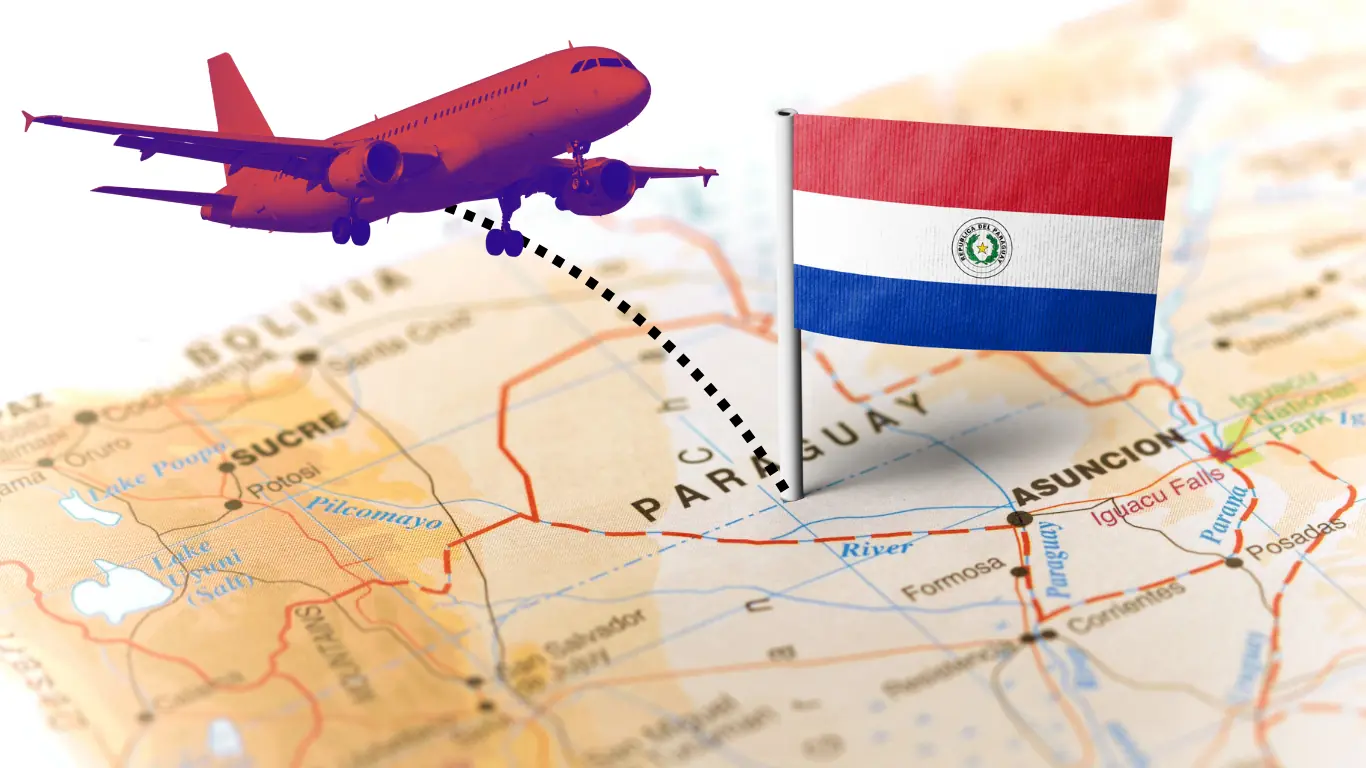
Before you book a flight: the documents you collect at home
Residency starts in your home country, not in Asunción. The single highest-value thing you can do before flying is get your foreign documents in order — apostilled, original, valid — because the failure point that bounces the most files is at the apostille step, not at Migraciones.
You will need:
- A valid passport. Valid for at least six months at the time of application, in good physical condition. Damaged passports get refused.
- Your original long-form birth certificate, issued by the vital records office of your country of birth. The short certified copy people sometimes have isn’t enough — DNM wants the long-form version. There’s no freshness requirement on this one — any issue date is accepted. Then this document gets apostilled in the country that issued it, under the 1961 Hague Convention. The apostille goes on the original; an apostille on a notarized copy is not accepted.
- A criminal background check from your country of citizenship — plus one from any country you’ve been resident in during the last five years. These get apostilled in the issuing country. Critical detail: Paraguay treats these as short-lived — no more than four months old at the time of application is the rule we work to. That clock is the most-missed timing constraint in the entire residency process.
- Marriage, divorce, or death certificates if applicable. No freshness requirement — any issue date is accepted, apostilled like the rest. If both spouses are applying, get two original copies of the marriage certificate — one for each file. Cheaper than ordering a second one from abroad once you’re already in Paraguay.

A note on the criminal background check: the type matters. Some countries issue multiple kinds of police certificates, and DNM only accepts one of them. Canadians, especially, get tripped up by the difference between an RCMP fingerprint-based certificate and a name-search certificate — only one of those is the right one. We’ve written a full country-by-country breakdown at Paraguay background checks by country. Read it before you order anything.
The apostille itself is a stamp under the Hague Convention that internationally validates the document. Roughly 115 countries are signatories. If your country is one of them, you go to whichever office handles apostilles in your jurisdiction (in the United States it’s the Secretary of State of the issuing state; in the UK it’s the Foreign, Commonwealth and Development Office; in Italy the local prosecutor’s office; in Germany varies by Bundesland; and so on). If your country is not a Hague signatory, the path is legalization at the nearest Paraguayan consulate instead. That route is slower and the document has to physically pass through their office.
A practical tip from the firm: bring a rigid legal-size folder with you to Paraguay, and keep your originals and apostilles inside it for the entire process. These are not documents you want bent or coffee-stained. The originals stay with you the whole time; only certified photocopies travel through the government system.
Arrival in Paraguay: your first 90 days as a tourist
Most Western nationalities — US, Canada, UK, Australia, New Zealand, all EU member states — enter Paraguay visa-free for up to 90 days. You get an entry stamp at the airport, that’s the whole formality. Make sure the stamp lands cleanly in your passport before you leave the immigration counter; if there’s any issue, raise it then, not later.
For nationalities that do require a tourist visa in advance, get it at a Paraguayan embassy or consulate before flying. One detail people miss: the visa fee may need to be paid in pristine USD bills — brand-new condition, no folds, no marks. Worn American hundreds get refused. Take care of this before you leave for the consulate.
Your point of entry is Silvio Pettirossi International Airport (ASU) in Luque, just outside Asunción. It’s small and easy to navigate. Use Bolt or Uber from the terminal into the city; both work well in Asunción and the ride to the Centro or Villa Morra neighbourhoods runs around Gs. 100,000 (roughly USD 13) depending on traffic.
Technically the 90-day tourist period gives you the entire window to file your residency application. Practically, plan to file in the first 30 days. Things slow down in Paraguayan offices — translators have queues, the notary you wanted is closed for a holiday, Migraciones changed the document list quietly two weeks ago — and you want runway.
A note on the Residencia Precaria slip you’ll see referenced below: it’s the certificate Migraciones issues to you on the day your residency application is accepted. It proves you have a residency file in process, lets you stay in Paraguay legally while DNM works through it, and costs approximately Gs. 538,135 (roughly USD 75) as part of the residency submission fees — not a separate “tourist visa extension.” If your tourist 90 days happen to expire after your submission is filed, the Precaria slip covers you; it’s the file-in-process status, not a tourist top-up you buy independently.
Translations and notarized copies in Paraguay
Every foreign document you brought in must be translated into Spanish by a public translator (Traductor Público Jurado) registered in Paraguay. Do not get translations done in your home country — Paraguayan authorities have no practical way to verify that a foreign translator is on Paraguay’s official register, and translations done abroad are routinely rejected. The only meaningful exception is documents already in Portuguese, accepted as-is from Brazil.
The Paraguayan Supreme Court of Justice maintains the official register of public translators. The directory is at https://datos.csj.gov.py/pjopendata/data/traductores. Most translators are clustered in Asunción and turn pages around in one to three business days. Even your passport photo page may need translation if it doesn’t carry Spanish-language descriptions. Costs scale with page count — budget roughly USD 60 for a small file and up to USD 375 if you have a heavy stack including divorce decrees, name change documents, multiple police certificates.
In parallel, you’ll be making notarized photocopies of every document at a Paraguayan public notary (escribano público). The originals stay in your folder. The notarized copies — usually two of each — are what travels through the government system. Photocopies must be on uncut sheets, no scissors, no trimming. Notaries know the format; just bring originals and they handle it.
Two notary offices most of our clients end up using:
- Escribanía Vicente Gadea — Caballero 204, Asunción — directly across the street from Migraciones. Phone +595 21 449 152.
- Escribanía Guido Flor — Av. Dr. Guido Boggiani 6411, Asunción — across the street from the national police building. Phone +595 981 934 562.
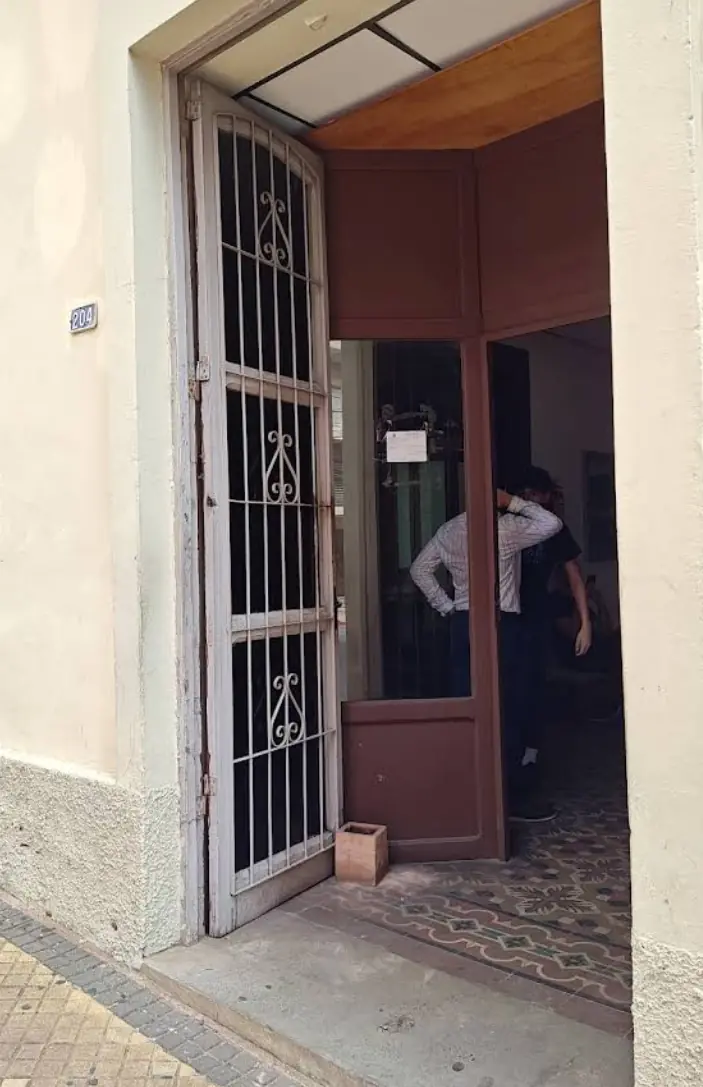

Both are walk-in. If you have a different notary recommended locally, that’s fine too — the directory of the Paraguayan Association of Notaries is at https://www.cep.org.py.
The local Paraguay-side documents
Three certificates can only be obtained on the ground in Paraguay, after you arrive. They get added to the file alongside your apostilled foreign documents.
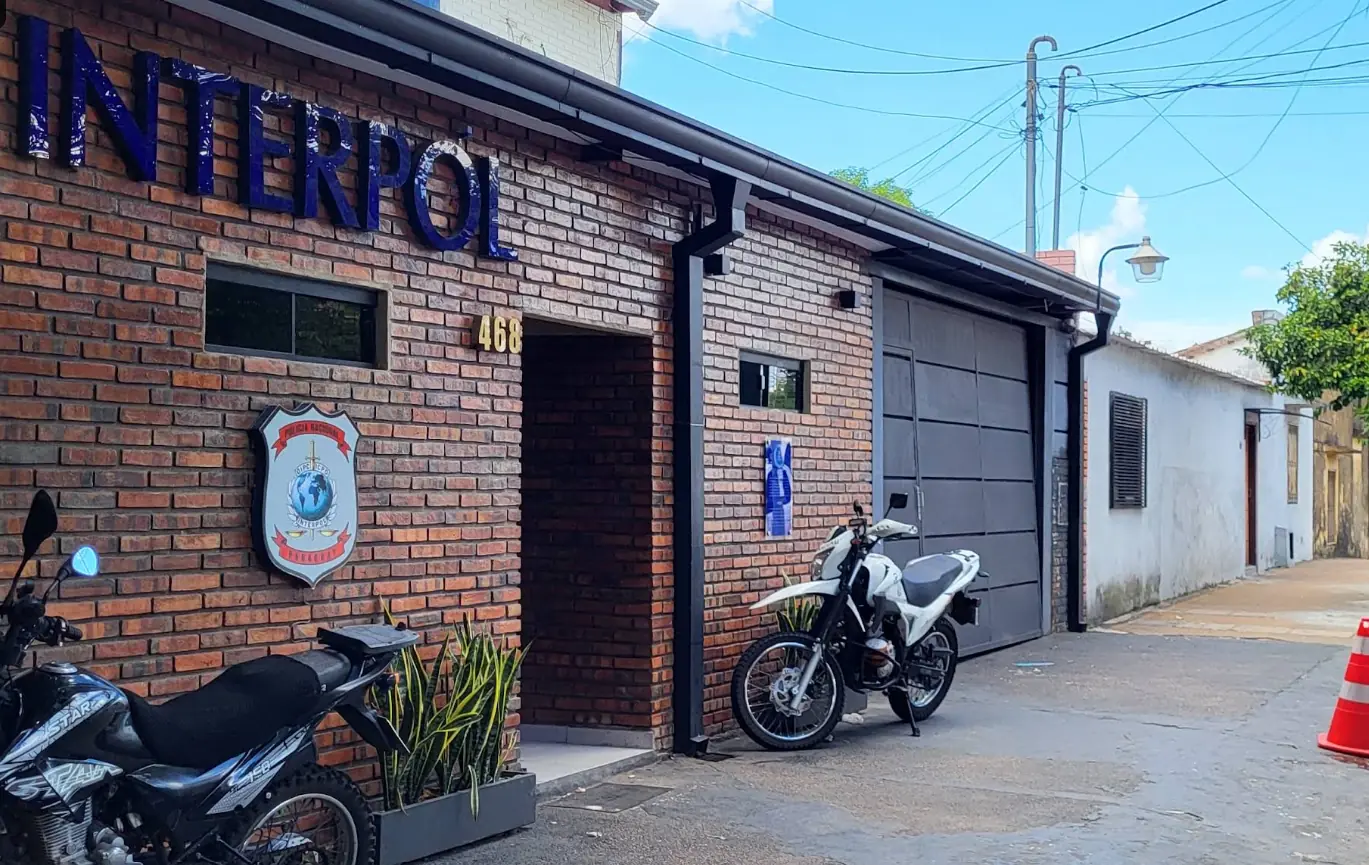
Interpol certificate — issued at the Interpol Paraguay office. Address: Cnel. Gracia Nº 468, Asunción. Phone +595 21 446 873. You bring an authenticated photocopy of your passport (from the notary), passport-sized photos, and you sit through traditional ink fingerprinting. Fee is paid in Guaraníes at the counter — verify the current figure on the day. Processing usually takes one to two days. There are copy shops and a photo studio directly across the street if you forgot anything.
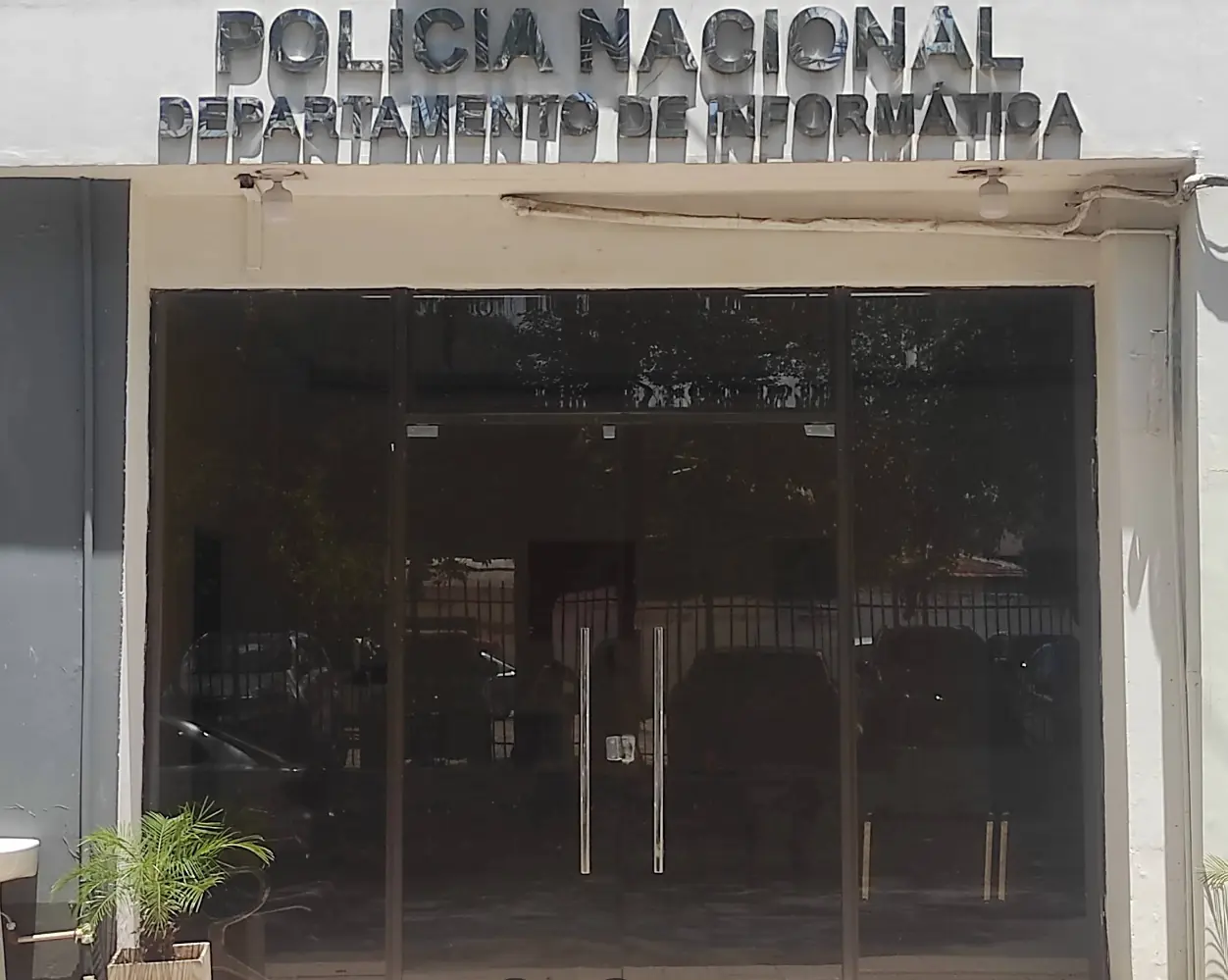
Police IT Department clearance (cybercrime certificate) — issued at Avda. Mcal. López 1451, Asunción. Phone +595 21 422 700 (general HQ; ask for the IT department). Often completed same-day. Fee is paid in Guaraníes at the counter — verify the current figure on the day.
Sworn declarations — two short sworn statements that DNM either provides or you bring in: one declaring your profession or work activity in Paraguay, one affirming you’ll respect the Paraguayan Constitution and laws. They can usually be filed electronically through Migraciones at the time of submission.
You will also need six (6) passport-sized photos at 3×4 cm (30×40 mm) — recent, plain white background, neutral expression, looking straight at the camera, no shadows. Take them yourself and print at the right size, or use the photo studio across from Interpol. Six covers the entire residency-plus-cédula run.
The submission visit: filing at Migraciones
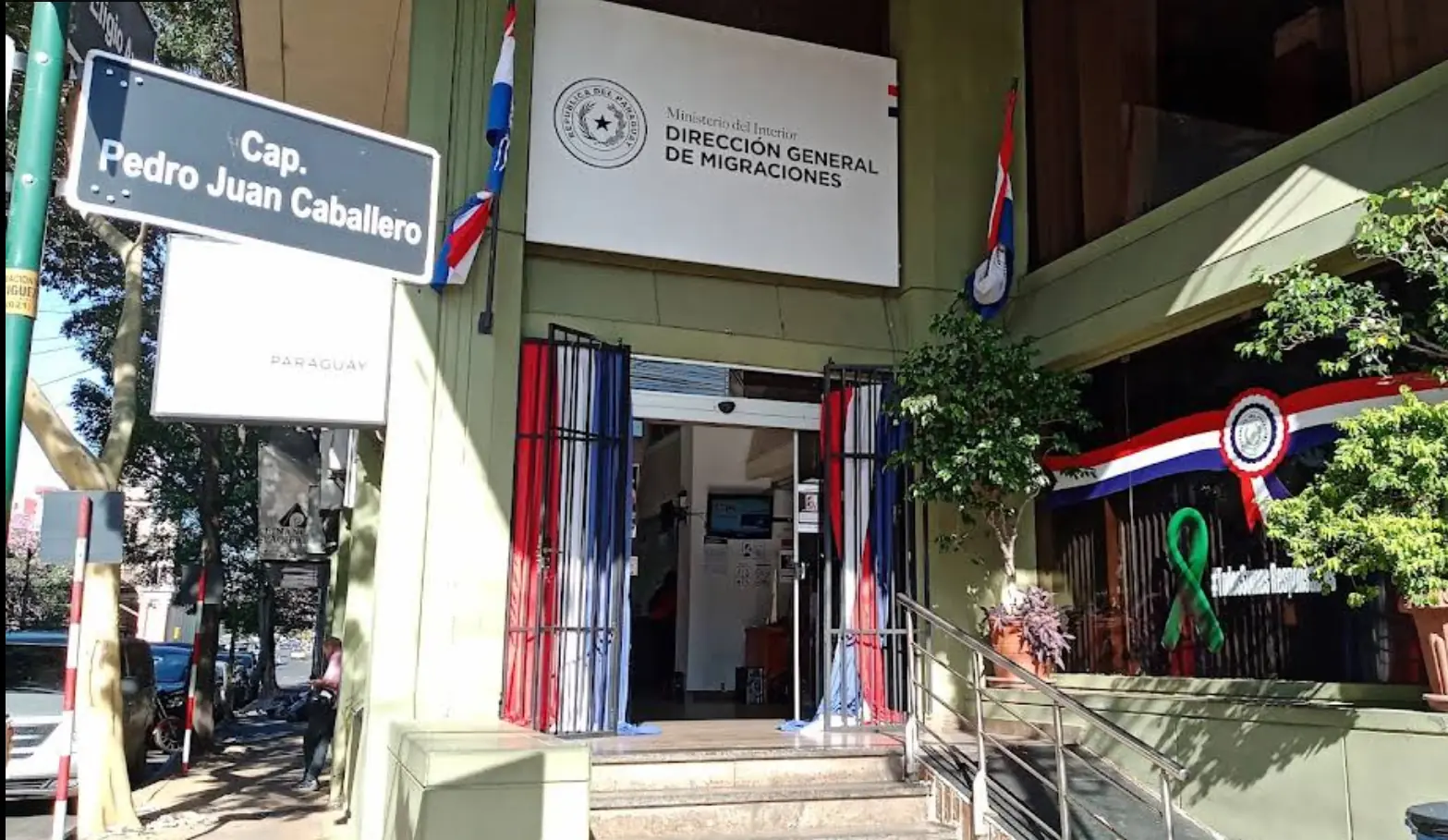
This is the day. You walk into the Dirección Nacional de Migraciones, the central office in Asunción. Address: Caballero 201, Asunción. Phone +595 21 411 2000. Website https://www.migraciones.gov.py.
Migraciones opens at 07:00, Monday to Friday. Get there before opening or shortly after — by 09:00 the queues are real. When you walk in, take a number from the kiosk. The first stop is the Informes desk, the information window — that’s where you confirm that the document list hasn’t shifted recently, because requirements occasionally do change and the desk knows before any blog does. Once you’re cleared on requirements, take a new number for Registro or Residencia and join the submission queue.
Your complete application package is the following stack:
- Original apostilled foreign documents — birth certificate, criminal record check, marriage / divorce / death certificate as applicable.
- Two notarized copies of each apostilled document.
- Spanish translations of all foreign documents (from a Paraguayan public translator).
- Two notarized copies of each translation.
- Original Interpol certificate plus two notarized copies.
- Original Police IT Department clearance plus two notarized copies.
- Two sworn declarations (profession; constitutional compliance).
- Your passport.
At the counter, the officer reviews the file against the originals, captures your biometric data — digital photo, fingerprints, signature — and you pay the government processing fee in Guaraníes. The fee currently runs around Gs. 2,690,675 (roughly USD 350), and is the figure to verify the day-of at the Informes desk because it does adjust. Some files attract small auxiliary charges; budget a little headroom.
When the submission is accepted, you walk out with the Residencia Precaria — a paper certificate that proves you’ve filed, carries your docket number (your unique file identifier), and lets you legally stay in Paraguay while DNM processes your application. Hold onto this document. Photograph it, put a digital copy in your password manager, store the paper somewhere safe. Every status inquiry you make over the next several months uses the docket number from this slip.
Tracking your application

Once the file is in, the wait begins. Realistic processing time for temporary residency at the moment is on the order of 60 to 100 days, sometimes longer. There is no reliable online tracking tool — be wary of any third-party site claiming to offer one. The system Paraguay uses is direct contact, and direct contact is what works.
You have four channels for inquiry, in rough order of usefulness:
- Phone — +595 21 411 2000. Migraciones’ official line. Operating hours Monday to Friday, 07:00 to 15:00, Paraguayan holidays excluded. This is the Paraguayan government’s number, not ours. Have your full name, passport number, and docket number ready before you dial.
- Email — [email protected]. Useful for a written record, useful when you want a paper trail. Response times vary; don’t expect same-day. Include your full name, passport number, and docket number in every message.
- In-person at Caballero 201. If you’re in Asunción anyway, walking in with your Residencia Precaria and asking at the Informes desk is often the most direct way to a real answer. Bring your passport.
- WhatsApp — informally. Anecdotally some people get a response by messaging Migraciones via WhatsApp. There is no officially advertised number for status checks and no guarantee. Treat it as a backup, not a primary channel.
The thing not to do is check in every three days. Migraciones runs on the cadence Migraciones runs on, and badgering doesn’t accelerate processing. A check-in every two to three weeks is reasonable. If you’re using Sweet Home Paraguay, we run these inquiries on your behalf — quietly, on the right cadence, with the docket number ready — so you don’t have to think about it.
Approval: the Carnet de Radicación
Approval comes as a notification — sometimes by email, sometimes by phone, sometimes through the firm running point on the file. The notification tells you when and how to come back to Migraciones to collect your physical residency card, the Carnet de Radicación.
Pickup is its own short visit. Bring your approval notification, your passport, and your Residencia Precaria. You may be asked to provide a digital signature on the day. There is no additional fee for collection — the government fee was paid at submission. You walk out with a laminated temporary residency card valid for two years.
That card is the trigger for the next step: applying for your cédula, Paraguay’s national identity card. The cédula is a separate process at a separate office (Departamento de Identificaciones, on Avenida Boggiani in Asunción), with a separate document checklist that includes some certificates you’ll need to refresh because they’re short-lived — three to four months, depending on the document. We’ve written that part up in detail at How to get your Paraguay cédula. The short version: temporary residency unlocks the cédula application, and the cédula is what makes daily life — bank accounts, contracts, mobile lines, driver’s license — actually work in Paraguay.
Permanent residency: what happens after the temporary 2 years
Temporary residency is good for two years. Around the end of that window — and broadly the rule is at 21 to 24 months in — you can convert to permanent residency.
Permanent residency in Paraguay is valid for 10 years, renewable, and carries far less hassle than temporary on the absence-threshold side. You don’t need to fly back constantly to keep it alive — a visit roughly every three years is enough to keep the card valid in current practice. It’s also the cleaner status for banks, for property transactions, and for the eventual citizenship clock (which starts from the date of permanent residency, not temporary).
Two rules grew teeth recently, and both are worth planning around from day one of the temporary card. First, presence: during the temporary period you cannot be outside Paraguay for more than 365 days. Migraciones pulls your entry and exit record when you file the conversion — this is checked, not assumed, and emailed explanations for a missed visit are not being accepted. The rhythm we recommend: one visit during months 10–12 of the temporary card, then file the conversion during months 21–24 — spacing the visit and the filing so no absence ever reaches 365 days. Second, economic solvency: the conversion file now includes proof you can support yourself. For most clients that proof is a RUC in good standing plus its tax compliance certificate — which is why the RUC decision belongs early in the temporary window, not at month 20. Beyond those two rules, the conversion paperwork is its own cycle; the full walkthrough is in the permanent residency guide.
Cédulas issued under temporary residency match the temporary card’s expiration; once you’re permanent, the cédula gets reissued under the permanent term as well. We handle that step continuity for clients moving from temporary to permanent — the same file team who carried temporary picks up where they left off.
One trip, two trips — what’s realistic
Run through us, the Essential track is one trip of about four days. Ideally, confirm your trip with us about a month before you fly — it isn’t required, but it lets us plan around Paraguayan holidays and make sure your documents are in a language that can be translated here. Then send photos of all your documents at least 7 days before you arrive, and we verify them remotely so issues are caught while you can still fix them from home. In country: day one, sign a power of attorney at a local notary and hand over the physical documents; day two, biometric submission for the cédula; day three, residency application submission; day four, finalization and confirmation. Then you fly out, and the remote processing runs without you — 3–4 months for the residency card plus 1 month for the cédula on the Essential track, if all goes smoothly. Your residency card and cédula are retrieved for you and can be picked up on a later visit or shipped to you (courier fees additional). One planning note if permanent residency is the destination: the single trip covers getting temporary residency in place. During the two-year temporary window, plan your return so you’re never outside Paraguay for more than 365 days — at least one trip back, ideally around months 10–12. Migraciones checks that record when you convert.
Doing it solo is a different shape. Without someone holding power of attorney to receive documents and run the follow-up, the typical self-filed path is two trips — one to file and collect the Residencia Precaria, one to come back for the Carnet and the cédula step — or one long continuous stay across the processing window. Files that need a third trip usually trace back to a document problem that a pre-flight review would have caught: a wrong apostille, a translation that needed redoing, an expired background check.
The CIE investment route can also collapse to a single trip, with permanent residency in hand on the way out — if the file is complete and the SUACE side runs cleanly. That’s its own post.
What trips applications up
After running this process repeatedly, the same handful of issues account for most of the bounced files:
- Wrong type of background check. The Canadian RCMP fingerprint-based certificate vs. name-search certificate confusion is the textbook case. Country-specific guidance is in Paraguay background checks by country.
- Translations done outside Paraguay. They almost always get rejected at the counter, even when they’re technically accurate. Translation has to come from a Paraguayan-registered public translator.
- Apostilles missed or affixed to the wrong document. The apostille goes on the original. An apostille on a photocopy or notarized copy is not accepted. Some countries make this confusing because their apostille office only handles certain document types — research the specific authority before you pay for anything.
- Background checks expired by the time of submission. No more than four months old at the time of application is the rule we work to. If you got your check in January and you’re filing after May, you need a new one. This is the single most common timing failure.
- Trying to use a service address (mailbox) where a real residential address is required. A virtual mailbox is great for receiving correspondence, but Migraciones — and especially Identificaciones for the cédula — increasingly want evidence of an actual residential address. We’ve written about that distinction at Paraguay mailbox vs residential address. Get this right early; correcting it late is painful.
What we handle
Most of the residency process is unglamorous. Standing in queues. Photocopying. Walking documents from one office to a notary across the street and back. Knowing which window at Migraciones opens first. Having someone who’s been through it 100x running point.
What Sweet Home Paraguay does on the Essential residency track:
- Document review before you fly. Your file is checked against the current DNM list before you book the ticket, so the apostille situation is right and you don’t show up with the wrong police check.
- Translation coordination with public translators registered in Paraguay — the translator selection, the page count, the turnaround.
- Notarization runs. We carry the documents from your hand to the escribano and back, in the right order.
- Day-of accompaniment at Migraciones. We’re with you in the queue, in Spanish, with the file pre-organized in the order DNM wants to see it.
- Tracking with DNM on your behalf for the months between submission and approval, on the right cadence — phone, email, in-person — using your docket number, without needing you to think about it.
- Continuity into the cédula step once temporary residency is approved. The same file team carries through to Identificaciones and the cédula application.
- The unglamorous parts. Booking the right windows. Queuing in the right order. Knowing the holidays in advance. Catching changes in the document list before the counter rejects something.
You can do all of this yourself. The law doesn’t require a representative. We’re here for the foreigners who’d rather hand in their receipts and get on with the rest of their lives.
We’re there for you when you need us. We’ll know your name. We handle the unglamorous parts.
Costs at a glance
All government and Paraguay-side fees are paid in Guaraníes, even where USD-equivalents are quoted for context. Figures fluctuate slightly with the exchange rate and with the rare government fee adjustment.
- DNM temporary residency government fee — approximately Gs. 2,690,675 (roughly USD 350). Verify at the Informes desk on the day of filing.
- Residencia Precaria slip issued at submission — approximately Gs. 538,135 (roughly USD 75). This is part of the residency submission, not a separate tourist extension.
- Spanish translations — roughly USD 30–50 per page; full files run from about USD 60 for a small stack to USD 375 for a heavy one.
- Notarization (escribano público) — typically USD 50–100 across all the authentications.
- Interpol certificate (Paraguay) — modest counter fee in Guaraníes; verify on the day.
- Police IT Department clearance — modest counter fee in Guaraníes; verify on the day.
- Photos — minor, a few dollars for six prints.
- Apostilles in country of origin — varies by country and document. Plan USD 20–100 per document for most Western countries.
- Sweet Home Paraguay handling fee — under USD 2,000 all-in for the Essential temporary-residency package, which sits below most of the providers operating in Paraguay. Create a free account in the Sweet Home Paraguay App for current pricing and the detailed scope of what’s included.
A self-filed temporary residency, all-in, typically lands in the USD 700–1,000 range across government fees, document processing, translations, notary, and transportation. Everything is paid in Guaraníes once you’re on the ground; the USD figures here are conversion estimates only.
What to do next

If you’re still scoping the move and want to map your full Paraguay setup before you commit to a date — residency, cédula, RUC, banking, address, the order things need to happen in — create a free account and tell us your situation. We’ll help you map the whole timeline before you commit anything.
If you’ve decided and you want to file, the Sweet Home Paraguay App is where the file lives — document upload, status, and the human team running it.
Paraguay is the anchor. Life is everywhere. The residency file is the unglamorous part — the few months of paperwork that lets the rest of your life be wherever you want it to be. Whether that’s working hard and playing hard, traveling and exploring, or settling down to enjoy the fruits of your labor, Paraguay is the base that makes it possible.
Paperwork is the enemy. The life that starts after is the prize. Hand in your receipts, focus on your passions, and we’ll do the rest.
Welcome to your sweet home Paraguay.